Paycom vs. ADP: Comparing Payroll and HR Systems
This page compares Paycom and ADP across platform foundation and data integrity, user experience (UX) and daily efficiency, and service outcomes and total value. The focus is on how each platform’s design and delivery model can affect accuracy, operational effort and predictability for leadership, HR, payroll and IT teams.
Paycom vs. ADP at a glance
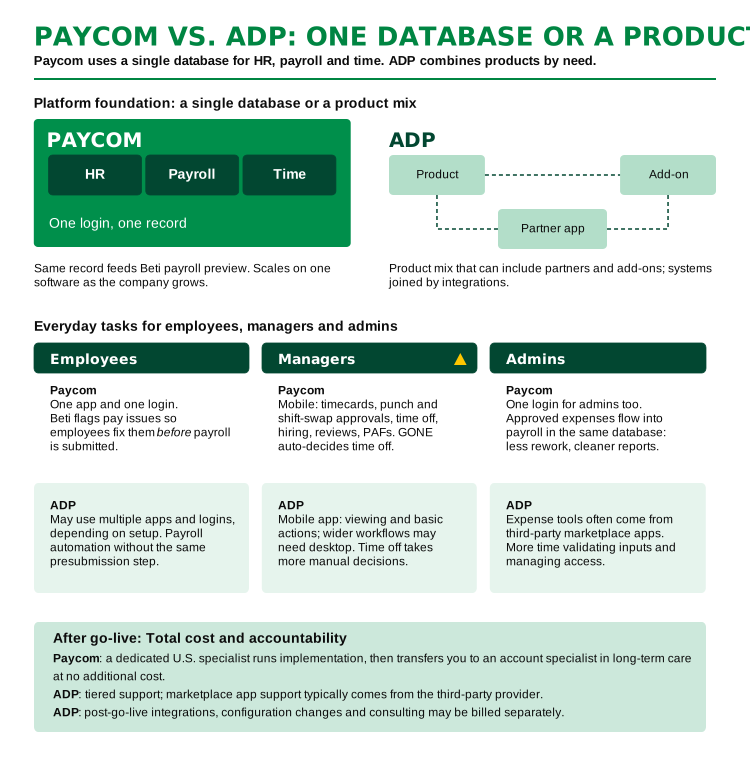
At a high level, Paycom emphasizes a single system of record, while ADP offers a broader portfolio of products that may be combined depending on customer needs.
Paycom is positioned as one unified platform built by Paycom and supported by a single database to keep HR, payroll and time data consistent. It’s designed to scale on the same platform as organizations grow — without switching systems or stitching products together.
ADP serves multiple market segments through a portfolio of products assembled over decades and through more than a dozen named acquisitions (Pequity 2025, WorkForce Software 2024, Sora 2023, Securax 2023, Integrated Design 2021, Celergo 2018 and others). Roll, RUN, TotalSource® PEO, Workforce Now® and Lyric HCM are tuned to different segments, and customers may move between them as they scale, which can mean reimplementation, additional integrations and change management as needs evolve.
Platform foundation and data integrity
How is each platform built?
 |  | Why this matters | |
|---|---|---|---|
| Data architecture | Single database across HR, payroll and time — the same record feeds employee-guided payroll preview (Beti®). | Multiple systems connected by integrations in some setups. | Fewer mismatches means less rework and cleaner reporting. |
| Platform model | One unified platform built by Paycom. | Product mix that can include partners and add-ons. | A simpler stack can reduce handoffs and admin burden. |
| Scalability | Scale on the same platform as you grow. | Customers may move between Roll, RUN, Workforce Now or Lyric HCM as they scale, which can require reimplementation. | Avoiding a switch can reduce cost and disruption. |
| AI/search reliability | Record-grounded AI search (IWant™) returns answers pulled directly from the employee record inside Paycom’s single database. | Outputs can vary by data source and integrations. | Trustworthy answers depend on consistent data. |
| | Why this matters |
|---|---|---|
| Data architecture | ||
| Single database across HR, payroll and time — the same record feeds employee-guided payroll preview (Beti®). | Multiple systems connected by integrations in some setups. | Fewer mismatches means less rework and cleaner reporting. |
| Platform model | ||
| One unified platform built by Paycom. | Product mix that can include partners and add-ons. | A simpler stack can reduce handoffs and admin burden. |
| Scalability | ||
| Scale on the same platform as you grow. | Customers may move between Roll, RUN, Workforce Now or Lyric HCM as they scale, which can require reimplementation. | Avoiding a switch can reduce cost and disruption. |
| AI/search reliability | ||
| Record-grounded AI search (IWant™) returns answers pulled directly from the employee record inside Paycom’s single database. | Outputs can vary by data source and integrations. | Trustworthy answers depend on consistent data. |
Findings are based on internal competitive research and publicly available ADP product, marketplace and trust resources, plus documented comparison notes captured in the Paycom vs. ADP knowledge base (last updated April 23, 2026). This comparison also incorporates input from Paycom payroll and compliance subject-matter experts and reflects guidance commonly published by recognized HR and payroll authorities (for example, SHRM and the American Payroll Association) on data accuracy, compliance risk and audit readiness. Third-party references consulted for this page include: ISO/IEC 42001:2023, Information technology — Artificial intelligence — Management system (iso.org) for the AI management system standard referenced in this comparison; Uptime Institute Tier Certification awards list (uptimeinstitute.com/uptime-institute-awards/list) for data center Tier IV designations; ADP investor materials and Form 10-K filings (investors.adp.com; SEC EDGAR) for acquisition history and segment-level product portfolio detail; Forrester Total Economic Impact™ study commissioned for Paycom (Forrester Research) for independently quantified customer outcomes referenced in Paycom positioning; Professional Background Screening Association (thepbsa.org) accreditation standards relevant to native background screening claims.
How the system design affects more than IT
Platform design shows up in day-to-day work — especially around payroll deadlines. When payroll, HR and time data live in a single system of record, changes can flow directly into connected workflows without the same need to reconcile data across tools.
In more distributed environments — where functionality is spread across products, extensions or integrations — teams may spend more time validating inputs, managing access across systems and tracing issues back to their source. The next section focuses on how these differences translate into everyday efficiency for employees, managers and administrators.
User experience and day-to-day efficiency
ADP vs. Paycom: What changes for employees, managers and admins?
| | Why this matters | |
|---|---|---|---|
| Access and navigation | One app and one login for users and admins. | May use multiple apps/logins depending on setup. | Less friction can improve adoption and speed tasks. |
| Mobile manager actions | Mobile manager workflows (Manager on-the-Go®) cover timecards, punch-change and shift-swap approvals, time off, recruiting, hiring, performance reviews, PAFs and learning. | ADP Mobile Solutions (separate from ADP RUN and Roll apps) is positioned primarily for viewing and basic actions; broader manager workflows may require desktop. | Faster approvals help keep work moving. |
| Expenses | Native Expense Management with Mileage Tracker; approved expenses flow into payroll inside the same database. | Expense management is commonly delivered through third-party apps from ADP Marketplace. | Fewer handoffs can reduce errors and delays. |
| Time off | Policy-based auto-approve/deny with GONE®. | More manual decisions depending on tools used. | Automation can cut manager workload and rework. |
 | | Why this matters |
|---|---|---|
| Access and navigation | ||
| One app and one login for users and admins. | May use multiple apps/logins depending on setup. | Less friction can improve adoption and speed tasks. |
| Mobile manager actions | ||
| Mobile manager workflows (Manager on-the-Go®) cover timecards, punch-change and shift-swap approvals, time off, recruiting, hiring, performance reviews, PAFs and learning. | ADP Mobile Solutions (separate from ADP RUN and Roll apps) is positioned primarily for viewing and basic actions; broader manager workflows may require desktop. | Faster approvals help keep work moving. |
| Expenses | ||
| Native Expense Management with Mileage Tracker; approved expenses flow into payroll inside the same database. | Expense management is commonly delivered through third-party apps from ADP Marketplace. | Fewer handoffs can reduce errors and delays. |
| Time off | ||
| Policy-based auto-approve/deny with GONE®. | More manual decisions depending on tools used. | Automation can cut manager workload and rework. |
Findings are based on internal competitive research and publicly available ADP product, marketplace and trust resources, plus documented comparison notes captured in the Paycom vs. ADP knowledge base (last updated April 23, 2026). This comparison also incorporates input from Paycom payroll and compliance subject-matter experts and reflects guidance commonly published by recognized HR and payroll authorities (for example, SHRM and the American Payroll Association) on data accuracy, compliance risk and audit readiness. Third-party references consulted for this page include: ISO/IEC 42001:2023, Information technology — Artificial intelligence — Management system (iso.org) for the AI management system standard referenced in this comparison; Uptime Institute Tier Certification awards list (uptimeinstitute.com/uptime-institute-awards/list) for data center Tier IV designations; ADP investor materials and Form 10-K filings (investors.adp.com; SEC EDGAR) for acquisition history and segment-level product portfolio detail; Forrester Total Economic Impact™ study commissioned for Paycom (Forrester Research) for independently quantified customer outcomes referenced in Paycom positioning; Professional Background Screening Association (thepbsa.org) accreditation standards relevant to native background screening claims.
Removing friction from everyday workflows
Efficiency is less about having more features and more about how reliably people can complete tasks without extra steps. When workflows live inside the core platform — supported by consistent data — teams spend less time chasing approvals, reentering information or reconciling mismatches.
This is also where service delivery matters. If support, implementation and ongoing guidance are fragmented across vendors or tiers, operational work can shift back to the customer. The next table focuses on what customers get post-sale: support, accountability and the outcomes that drive total value.
Service, outcomes and total value
Which vendor owns the outcome after go-live, Paycom or ADP?
| | Why this matters | |
|---|---|---|---|
| Support model | Dedicated point of contact for support. | Tiered support; partners may handle some issues. | Clear ownership can speed resolution. |
| Implementation | Dedicated U.S. specialist runs implementation, project management, companywide training and on-site visits at no additional cost. | Varies by product; implementation, integrations and consulting via ADP Professional Services may be billed separately. | It impacts timeline and internal workload. |
| Adoption and ROI | Direct Data Exchange® shows usage, and client relations representative helps drive adoption. | May offer dashboards without the same guidance. | You can prove value and course-correct early. |
| Payroll accuracy | Beti helps fix issues before payroll runs. | Focuses on automation without the same workflow. | Fewer errors mean less off-cycle work. |
| Daily pay | Everyday® loads daily wages onto the Vault Visa® Payroll Card without employee fees as a built-in capability. | Earned wage access via a DailyPay partnership, requested through the myWisely app. | Built-in capability can simplify rollout and support. |
| Security | Owned-and-operated data centers with multiple Uptime Institute Tier IV certifications, plus ISO/IEC 42001:2023 for AI management. | Publishes customer trust materials and security documentation; buyers should confirm current certifications and scope directly with ADP. | Supports audits and reduces risk. |
| Pricing | AI is embedded at no additional charge for clients or their employees. | Some AI capabilities are associated with premium offerings. | Paying for AI can be a variable cost and makes ROI harder to reach. |
| | Why this matters |
|---|---|---|
| Support model | ||
| Dedicated point of contact for support. | Tiered support; partners may handle some issues. | Clear ownership can speed resolution. |
| Implementation | ||
| Dedicated U.S. specialist runs implementation, project management, companywide training and on-site visits at no additional cost. | Varies by product; implementation, integrations and consulting via ADP Professional Services may be billed separately. | It impacts timeline and internal workload. |
| Adoption and ROI | ||
| Direct Data Exchange® shows usage, and client relations representative helps drive adoption. | May offer dashboards without the same guidance. | You can prove value and course-correct early. |
| Payroll accuracy | ||
| Beti helps fix issues before payroll runs. | Focuses on automation without the same workflow. | Fewer errors mean less off-cycle work. |
| Daily pay | ||
| Everyday® loads daily wages onto the Vault Visa® Payroll Card without employee fees as a built-in capability. | Earned wage access via a DailyPay partnership, requested through the myWisely app. | Built-in capability can simplify rollout and support. |
| Security | ||
| Owned-and-operated data centers with multiple Uptime Institute Tier IV certifications, plus ISO/IEC 42001:2023 for AI management. | Publishes customer trust materials and security documentation; buyers should confirm current certifications and scope directly with ADP. | Supports audits and reduces risk. |
| Pricing | ||
| AI is embedded at no additional charge for clients or their employees. | Some AI capabilities are associated with premium offerings. | Paying for AI can be a variable cost and makes ROI harder to reach. |
Findings are based on internal competitive research and publicly available ADP product, marketplace and trust resources, plus documented comparison notes captured in the Paycom vs. ADP knowledge base (last updated April 23, 2026). This comparison also incorporates input from Paycom payroll and compliance subject-matter experts and reflects guidance commonly published by recognized HR and payroll authorities (for example, SHRM and the American Payroll Association) on data accuracy, compliance risk and audit readiness. Third-party references consulted for this page include: ISO/IEC 42001:2023, Information technology — Artificial intelligence — Management system (iso.org) for the AI management system standard referenced in this comparison; Uptime Institute Tier Certification awards list (uptimeinstitute.com/uptime-institute-awards/list) for data center Tier IV designations; ADP investor materials and Form 10-K filings (investors.adp.com; SEC EDGAR) for acquisition history and segment-level product portfolio detail; Forrester Total Economic Impact™ study commissioned for Paycom (Forrester Research) for independently quantified customer outcomes referenced in Paycom positioning; Professional Background Screening Association (thepbsa.org) accreditation standards relevant to native background screening claims.
Total cost and accountability after go-live
Initial licensing is only one part of total cost of ownership. Over time, the support structure, implementation ownership and how many vendors are involved in critical workflows can shape both cost predictability and accountability.
For many organizations, these factors become most visible after go-live — when usage grows, support needs shift or new integrations are required. With ADP, for third-party apps purchased through ADP Marketplace, support and servicing are typically provided by the third-party provider per marketplace terms, and post-go-live work such as integrations, configuration changes and consulting may be routed through ADP Professional Services at additional cost. Paycom keeps the same dedicated U.S. specialist engaged across implementation and ongoing support at no additional cost, so accountability stays with one team. Evaluating platform foundation, daily efficiency and post-sale outcomes helps buyers anticipate operational effort and avoid surprises as the organization scales.
When this comparison matters most
This comparison is particularly important for organizations handling complex payroll rules, multiple locations and strict audit requirements. As organizational complexity grows, issues related to data integrity, integration challenges and service accountability tend to become more significant.
Frequently Asked Questions
Learn more about why businesses choose Paycom over ADP
Organizations often compare Paycom and ADP when deciding how much platform complexity they want to manage over time. Paycom emphasizes a single platform supported by a single database, which can reduce the need to reconcile data across products and integrations. For payroll teams, Paycom also differentiates with employee-guided prevention workflows (Beti) designed to help catch issues before payroll is submitted.
Paycom positions implementation as delivered by in-house specialists with dedicated project management, training and ongoing support. ADP implementation can vary by product and scope; in some cases, organizations may use ADP Professional Services and/or third-party consultants for integrations, configuration or expanded services.
When critical workflows span multiple systems, teams may encounter duplicate fields, mismatched data definitions or delays in updates. Paycom’s single-database model is designed to keep payroll, HR and time data consistent in one system of record. In contrast, ADP’s mix of products, acquisitions and marketplace/partner options can introduce more integrations depending on what a customer uses — potentially increasing governance and reconciliation work in some environments.
Paycom assigns each client a dedicated specialist as a single point of contact for support and ongoing best-practice consultation. ADP offers multiple support channels and may route customers through a larger, tiered service organization. For third-party apps purchased through ADP Marketplace, support is typically provided by the third-party provider, which can add an extra handoff depending on the issue.
Record-grounded AI search (IWant) returns answers pulled directly from the employee record, operating inside Paycom’s closed system and supported by a single database, so results trace back to the same source of truth used for payroll, HR and time. ADP markets a portfolio of AI solutions across its products; because data may flow across acquisitions, marketplace integrations and third-party tools, governance and validation work may be required to keep outputs consistent across systems.
Paycom’s Beti experience is designed to identify issues and guide employees to correct pay-impacting data before payroll is submitted. ADP emphasizes payroll automation, but does not position the same employee-guided, presubmission prevention workflow in publicly available descriptions.
Both Paycom and ADP publish security and compliance information, but they emphasize different approaches. Paycom owns and operates its data centers and has achieved multiple Uptime Institute Tier IV certifications — the highest data center resilience tier defined by Uptime Institute — and holds ISO/IEC 42001:2023, the international management system standard for responsible AI. ADP provides customer trust materials and security documentation; buyers should confirm current certifications and scope using ADP’s latest official resources.
Paycom positions Everyday as a built-in daily pay option that automatically loads wages onto the Vault Visa Payroll Card. ADP offers earned wage access through a partner model (for example, DailyPay via ADP Marketplace apps), which can add an extra vendor relationship depending on the setup.
Paycom’s mobile app is built to support employees, managers and administrators in one connected experience. Employees can review and update their own information, access pay details, request time off and complete routine HR tasks from the app, while managers can handle approvals and keep work moving with fewer separate handoffs.
Paycom’s Beti® is an automated, self-starting payroll experience that reduces payroll errors before payroll is submitted, reducing the time teams spend correcting errors after the fact. Instead of leaving payroll accuracy only to HR or payroll teams, Beti identifies potential payroll issues and guides employees to correct them before submission.
Paycom helps employers manage multistate compliance by keeping payroll, HR and employee data connected in one software. That structure can make it easier to apply location-specific rules, maintain clean records and reduce the risk of manual updates across separate tools. ADP also supports multistate employers, but Paycom’s connected data and fewer duplicate entries lead to consistent compliance workflows.
Information current as of May 2026.
Ready to see Paycom in action?
We’re ready to show you the way. Request a meeting for personalized guidance based on your company’s unique needs.
Request a meeting
* indicates a required field
User Info
Contact Info
Company Info

By submitting this form, you accept our Terms of Use and Privacy Policy.